Septic Service in Milledgeville, GA — Pumping, Repair & Installation
Baldwin County's red clay soil accelerates septic wear — most residential tanks need pumping every 3 to 5 years to prevent drain field failure. We provide septic tank pumping, repair, installation, and inspections throughout Baldwin County, Georgia for homeowners and businesses.
How much does septic service cost in Baldwin County?
Routine septic tank pumping in Milledgeville and Baldwin County, Georgia costs $250 to $450 for a standard residential tank. The region's dense red clay Piedmont ultisol accelerates drain field wear, requiring pumping every 3 to 5 years. Regular maintenance prevents system failure across Baldwin County's residential and commercial properties.
Complete Septic Service Solutions in Baldwin County
From routine pumping and maintenance that prevent the failures Baldwin County's red clay soil accelerates, to full system installation when a system has reached end of life — Milledgeville Septic covers every stage for residential and commercial properties throughout the county.
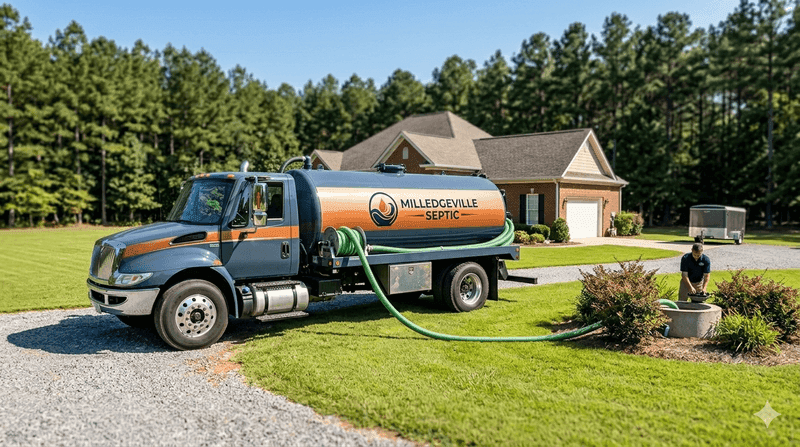
Septic Tank Pumping
Regular pumping is the single most important step for preventing backups and system failure. We recommend every 3-5 years for Baldwin County properties to manage Georgia's red clay soil conditions.
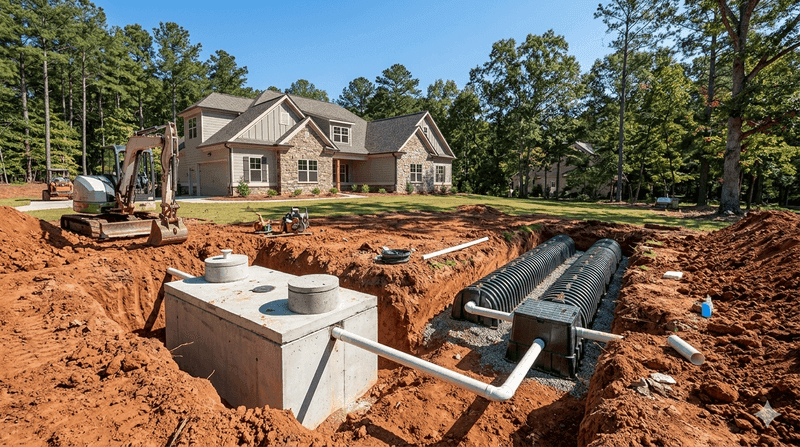
Septic System Installation
Complete design and installation for new construction or replacement systems. We handle soil testing, permitting, and Georgia DHR compliance throughout Milledgeville.
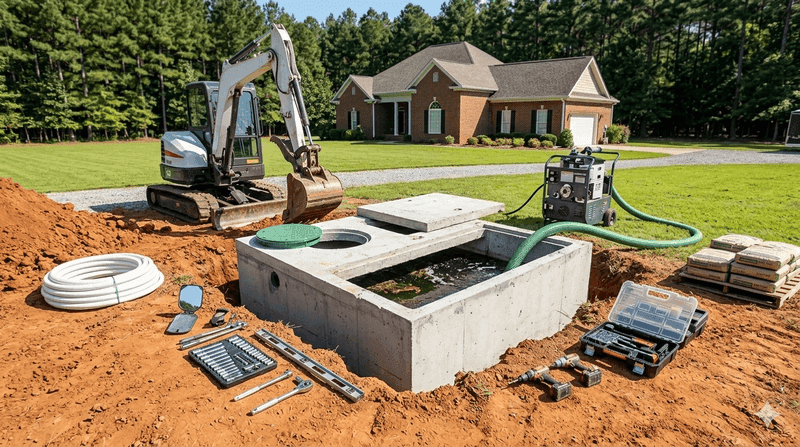
Septic Tank Repair
Fast, reliable repair for damaged tanks, broken lids, and structural issues. Our team diagnoses problems quickly and provides lasting solutions for Baldwin County properties.
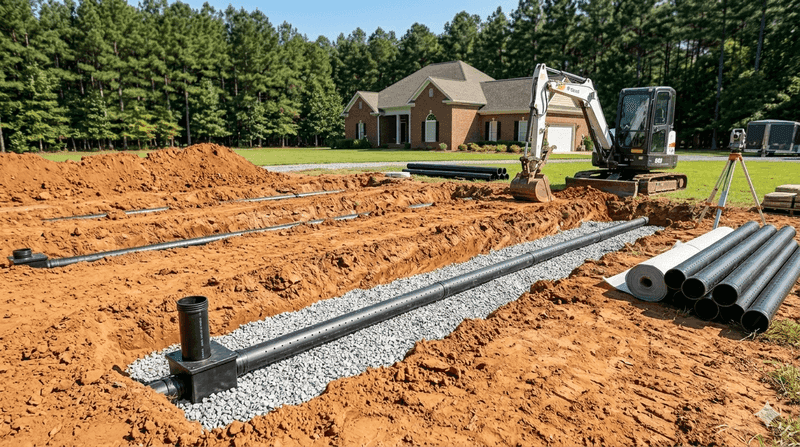
Drain Field Repair
Drain field issues are common in Milledgeville's clay-heavy soil. We inspect, repair, and replace failing leach fields to restore proper wastewater filtration and prevent property damage.
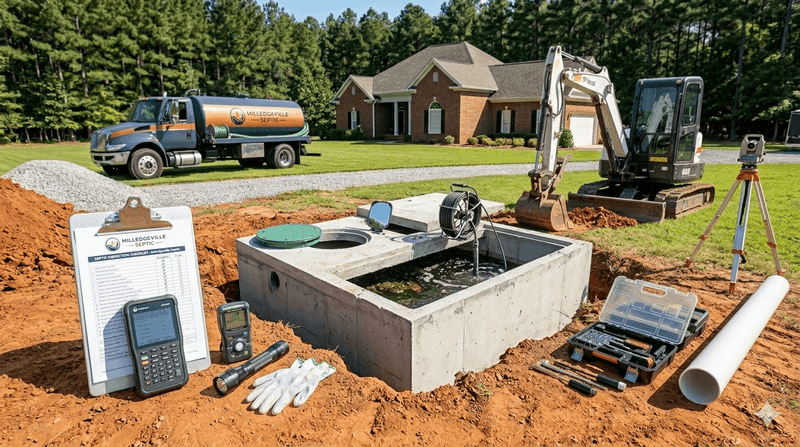
Septic Inspections
Thorough inspections for real estate transactions, routine maintenance, or troubleshooting. We assess tank condition, drain field health, and overall system performance.
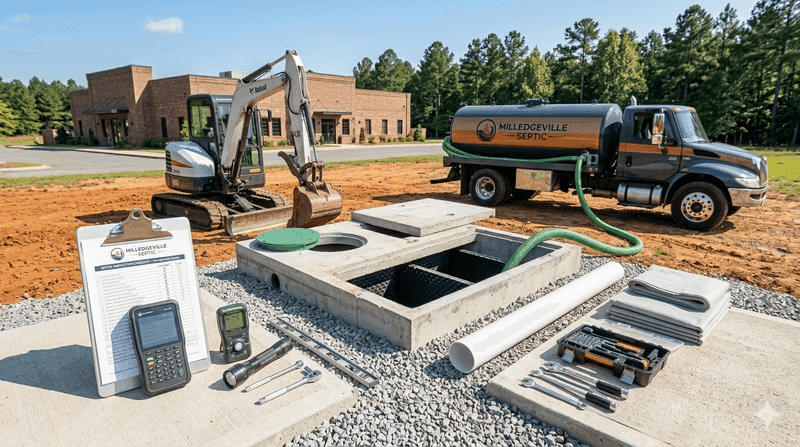
Grease Trap Cleaning
Commercial grease trap pumping and cleaning for restaurants and food service businesses in Baldwin County. We ensure compliance with local health department regulations.
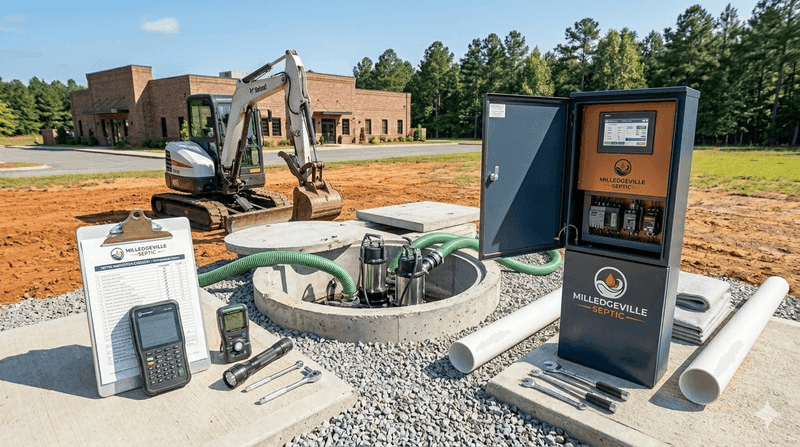
Lift Station Service
Maintenance, repair, and emergency service for properties where gravity drainage isn't possible. We service residential and commercial lift stations throughout Milledgeville.
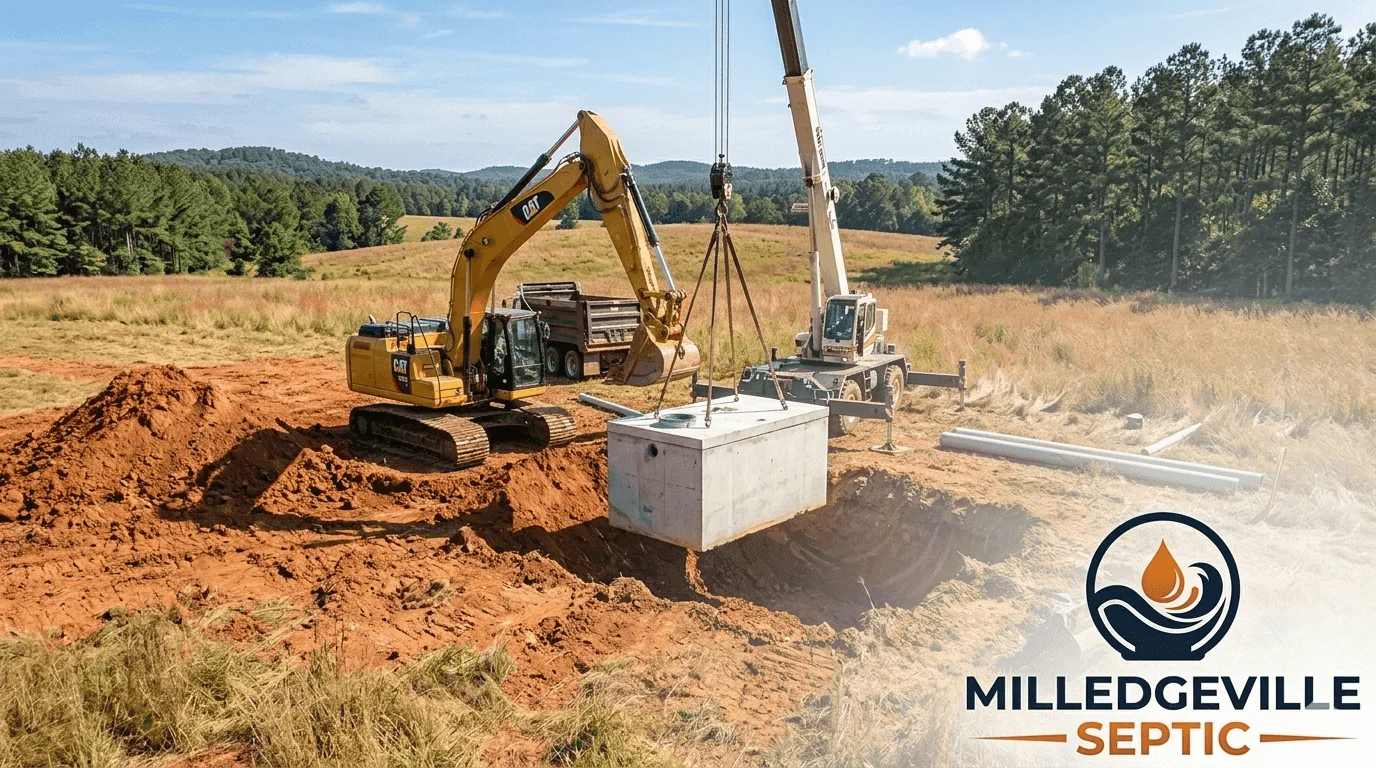
Why Choose Milledgeville Septic Service?
Local Knowledge. Honest Service. Reliable Results.
We serve Milledgeville, GA and all of Baldwin County. Rural Georgia properties come with unique challenges — heavy red clay that affects drain field performance, long driveways requiring specialized equipment access. Typical 1,000 to 1,500 gallon residential tanks should be pumped every 3 to 5 years, and most systems last 20 to 30 years with proper care.
Every system we install, pump, or repair gets the same care we'd give our own property. We're not a corporate franchise passing through — we're your neighbors, and we'll be here when you need us again in 3-5 years for your next pumping or if an emergency strikes.
Whether you need routine maintenance, a new installation, or emergency repair, we provide transparent pricing, thorough work, and genuine customer service. That's how we've built our reputation in Baldwin County, and it's how we'll earn yours.
Septic Service in Milledgeville & Baldwin County
Milledgeville Septic provides local septic service throughout Baldwin County, Georgia, serving Milledgeville and surrounding communities including Hardwick, Midway, Scottsboro, Sandersville, Eatonton, Gray, Sparta, and Monticello. From routine septic tank pumping to emergency septic repair, drain field replacement to new septic system installation — we serve rural properties, residential homes, and commercial businesses across middle Georgia. For county-level resources and permit information, visit the Baldwin County, Georgia official website.
Rural Baldwin County properties being developed often need a private well drilled around the same time as a new septic system — Milledgeville Well Drilling serves Baldwin County property owners for residential well drilling, pump repair, and water testing. New construction in Baldwin County typically requires site preparation before a septic system can be installed — Milledgeville Land Clearing handles land clearing, forestry mulching, and lot preparation throughout the county. Once the property is ready, Milledgeville Gravel provides gravel driveway installation and grading for rural Baldwin County properties.
Septic Service Frequently Asked Questions
What are septic services?
How often should a septic tank be pumped?
What are the signs of a failing septic system?
What does septic tank pumping cost?
Do you need to service a septic tank?
What do I do if my septic tank is backing up?
How do I know if my drain field is failing?
How much does a new septic system cost in Georgia?
Who provides septic service in Baldwin County, Georgia?
How do I find my septic tank?
How long does a septic system last in Baldwin County?
Can I use a garbage disposal with a septic system?
What is a septic drain field and how does it work?
What is included in a septic inspection?
What permits are required for a new septic system in Georgia?
What is septic service?
How much does a septic service cost?
Is a full septic tank an emergency?
What happens if you don't pump your septic tank?
Can a septic tank be repaired?
Request Your Free Quote
Fill out the form below and we'll get back to you promptly with a detailed estimate.
Our Baldwin County Service Area
We cover all of Baldwin County, Georgia — Milledgeville, Hardwick, Midway, and every surrounding community.
Milledgeville + Baldwin County Permit Monitoring
We monitor Baldwin County Environmental Health septic system permit activity on an ongoing basis. Aggregated permit data for Q1 / Q2 / Q3 2026 is currently being compiled and will be published here as records become available.
Data Forthcoming